
Search Etowah County Civil Court Records
Civil court records in Etowah County show lawsuits, contract fights, property claims, and other legal matters filed in the county court system. The Circuit Clerk's office at the Etowah County Courthouse in Gadsden keeps these records. You can search civil case info online through Alacourt or stop by the clerk's office in person. Etowah County sits in the 16th Judicial Circuit along with Cherokee County. Circuit court takes civil cases over $20,000, while district court handles smaller claims. Most civil filings are public records under Alabama Code Section 36-12-40. This means you have the right to look at and copy these documents. The clerk's staff can help with record searches and give you certified copies for court use or personal needs. They deal with hundreds of requests each month, so having case details ready when you call or visit will speed things up.
Etowah County Quick Facts
Etowah County Circuit Clerk
The Circuit Clerk is the main keeper of civil court records in Etowah County. This office holds records for both circuit court and district court civil cases. The current Circuit Clerk is Cassandra Sam Johnson. Her office takes case filings, works through motions and orders, and gives copies of court docs to the public. Staff at this office can tell you if a case exists, pull up basic case info, and make copies of most documents in the file. They cannot give legal advice, but they can point you to the right forms and explain filing steps.
| Circuit Clerk | Cassandra Sam Johnson |
|---|---|
| Address | 801 Forrest Ave, Suite 202 Gadsden, AL 35901 |
| Phone | (256) 549-2181 |
| Hours | Monday through Friday, 8:00 AM to 4:30 PM |
| Website | etowah.alacourt.gov |
The Etowah County Courthouse sits on Forrest Avenue in downtown Gadsden. Parking is in nearby lots. When you visit the clerk's office, bring valid ID and any case info you have. Party names or case numbers help a lot. Staff can help you find records, but having details speeds things up. The courthouse has a metal detector at the entrance, so leave pocket knives and other banned items in your car. Plan for a short wait during busy times like Monday mornings and the first week of each month.
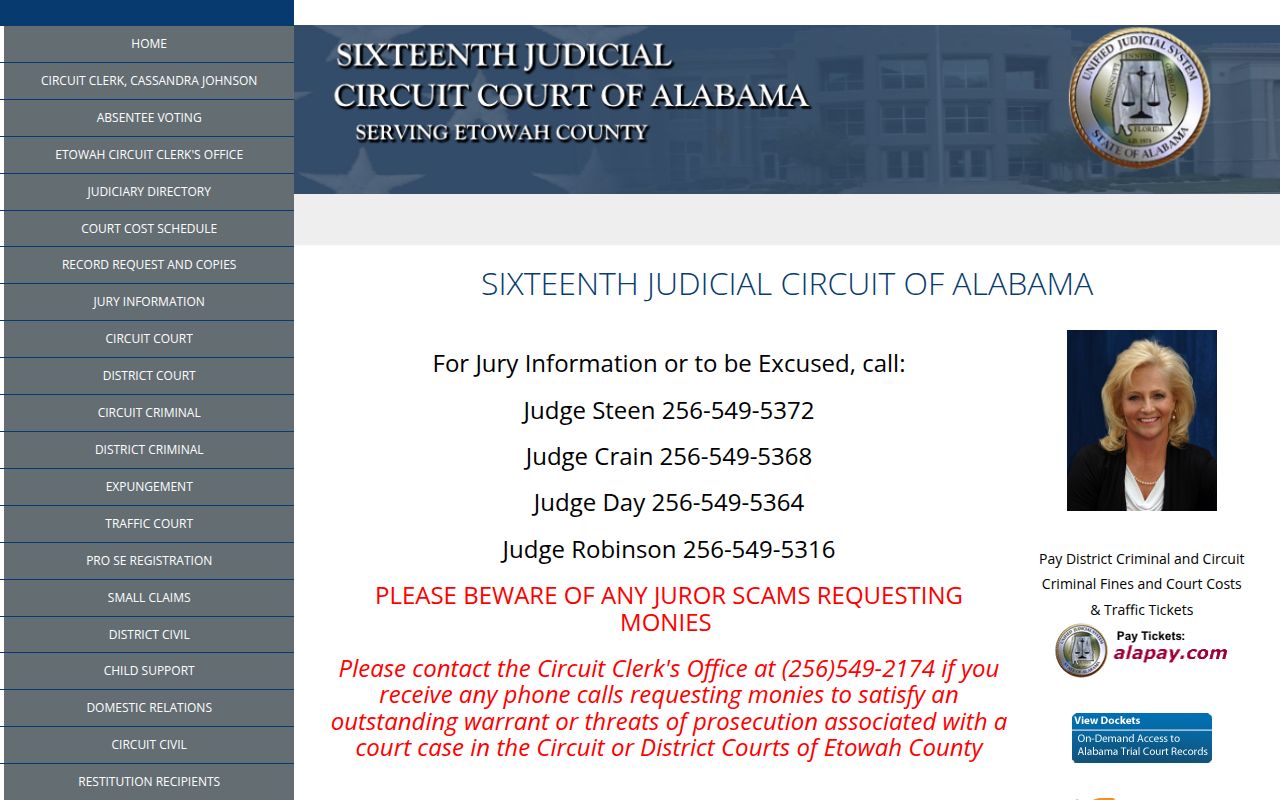
Online Access Through Alacourt
The Alacourt Public Access portal lets you look up Etowah County civil court records online. Search by party name or case number. You need to make an account first. District court lookups cost $19.99, and circuit court lookups cost $29.99 per search. The system shows case info, party names, filing dates, and document lists. Results come up fast, and you can print what you find right from the site.
Etowah County also maintains a local court website at etowah.alacourt.gov with information about court schedules, forms, and contact details for court divisions.
Types of Civil Cases in Etowah County
Civil court records in Etowah County cover many kinds of legal matters. The case type sets which court handles it and what info shows up in the record. Knowing the difference between circuit and district court helps you find the right records faster.
Circuit Court Civil Cases
The Etowah County Circuit Court takes civil cases where more than $20,000 is at stake, as set by Alabama Code Section 12-11-30. These cases include big contract fights, injury lawsuits, business disputes, real estate claims, and appeals from district court. Circuit court also has sole power over equity matters like injunctions. Civil jury trials in circuit court use six jurors unless both sides agree to fewer.
District Court Civil Cases
Etowah County District Court takes civil cases where $20,000 or less is at stake, under Alabama Code Section 12-12-30. Common case types include landlord-tenant fights, contract claims, property damage, and debt collection. District court civil cases move faster than circuit court cases. The rules are simpler. You can often get a hearing date within a few weeks of filing.
Small Claims Court
Small claims court is part of district court. It handles disputes under $6,000 per Alabama Code Section 12-12-31. The process is simple and built for people without lawyers. Common small claims matters include security deposit fights, minor contract claims, and small debts. You file a small claims case at the district court clerk's window. The filing fee is usually under $100, and you can represent yourself without any legal training.
What Civil Court Records Contain
A civil court record often includes the complaint that starts the case, the summons, answers filed by defendants, motions, court orders, and the final judgment. Discovery docs sometimes appear in the file. Trial transcripts show up if someone ordered them. Some papers may be sealed by court order, but most civil filings are public. The clerk can tell you what is in a specific file before you pay for copies.
Related Record Sources in Etowah County
Civil court records often link to records kept by other county offices. When you dig into a civil matter, checking these other sources can fill in the gaps and give you a fuller view of what happened.
Probate Court and Property Records
The Etowah County Probate Judge keeps property records like deeds, mortgages, and judgment liens. Under Alabama Code Section 6-9-190, a civil judgment becomes a lien on the debtor's land when properly recorded. If you want to know whether someone has outstanding judgments, check the probate court's lien records. The Probate Judge's office is in the Etowah County Courthouse. Lien searches there cost a small fee and can show you any recorded judgments against real property in the county.
Federal Court Records
Some civil cases go to federal court. Etowah County is in the Northern District of Alabama, Northeastern Division. This court holds sessions in Gadsden. Federal civil cases with federal law issues, parties from different states, or more than $75,000 at stake may be filed there instead of state court. Federal records are on PACER at $0.10 per page.
Bankruptcy Records
Bankruptcy filings may affect civil cases or show info about a party's money problems. Etowah County bankruptcy cases go to the U.S. Bankruptcy Court for the Northern District of Alabama. These records are on PACER. They can show past judgments, creditors, and debts. If someone you are suing filed for bankruptcy, the case may be put on hold until the bankruptcy court decides what happens next.
Legal Framework for Civil Court Records
Alabama law sets how civil court records are made, kept, and accessed. Knowing these rules helps when you ask for records. The state has clear guidelines on what is public and what may be sealed.
Public Records Access
Alabama Code Section 36-12-40 gives Alabama residents the right to look at and copy public records. Courts read this law broadly in favor of letting people see records. If an agency says no, it must prove an exemption applies. There is no set form for requests. Putting your ask in writing creates a record you can use later if there is a dispute.
Court Record Confidentiality Rules
The Alabama Rules of Court-Record Privacy took effect January 1, 2025. Rule 104(A) says court records are open unless a law, rule, or court order says they are not. The rules list types of info that may be hidden or sealed. This includes Social Security numbers, bank account numbers, and some personal IDs. Parties can also ask the court to seal records if they show good cause for it.
Statutes of Limitations
Civil lawsuits must be filed within time limits set by Alabama law. Under Alabama Code Section 6-2-34, claims on written contracts have a six-year limit. Injury and property damage claims have a two-year limit under Section 6-2-38. If you are looking for a case, knowing when the events took place helps you narrow down your search.
Service of Process Requirements
Civil cases in Alabama must follow service of process rules under Rule 4 of the Alabama Rules of Civil Procedure. Proper service makes sure the defendant gets notice of the lawsuit. Service records, including proof of service forms, become part of the court file. These records show when and how the defendant was served, which matters if the defendant claims they never got notice.
How to Request Civil Court Records
There are a few ways to get civil court records from Etowah County. The best way depends on how fast you need them and whether you need certified copies. Each method has trade-offs in cost, speed, and what you can get.
Online Requests
The fastest way is searching through Alacourt at pa.alacourt.com. Make an account, search by name or case number, and pay the fee to see case info. You can print docs right from the site. Online records are not certified. But they work fine for basic research and background checks.
In-Person Requests
Stop by the Circuit Clerk's office at 801 Forrest Ave, Suite 202, in Gadsden. Bring your ID and any case details you have. Staff can search records and make copies while you wait. Going in person works best when you need certified copies or want to look through a big file. You can see the full case folder and ask staff questions about what you find.
Mail Requests
Send written requests to the Circuit Clerk at the address above. Include full party names, rough filing dates, case type, your return address, and a check for fees payable to the Etowah County Circuit Clerk. Allow 5 to 10 business days. Call first to check current fees. Mail works well if you live far from Gadsden or cannot take time off work to visit.
Public Records Requests
For records hard to find through normal channels, submit a formal public records request under Alabama Code Section 36-12-40. Be clear about what you want. The law sets no deadline, but most offices respond in a fair amount of time.
The 16th Judicial Circuit
Etowah County sits in the 16th Judicial Circuit along with Cherokee County. The circuit has several circuit court judges who hear civil, criminal, and family cases. The presiding judge handles admin matters for the circuit. Cases get assigned to specific judges when they are filed.
Circuit judges rotate among counties in multi-county circuits. But Etowah County's size means judges are often in Gadsden. Court schedules are posted on the Alacourt website and at the courthouse. Civil trial terms are set a few times a year. Check the posted schedule to see when your case might be called.
The district court also works within the 16th Circuit. It handles civil cases under $20,000, preliminary hearings, and traffic matters. District judges are assigned to specific courts in the circuit. If you have a smaller civil case, you will likely appear in district court rather than circuit court.
Legal Assistance Resources
Several groups help Etowah County residents who need legal help with civil matters but cannot pay for a private lawyer. These resources are free or low-cost for those who qualify.
Legal Services Alabama
Legal Services Alabama gives free civil legal help to low-income residents who qualify. They take housing disputes, family law matters, consumer issues, and public benefits cases. Call the statewide intake line at 1-866-456-4995. Income limits apply. Staff will ask about your household size and income to see if you qualify for their services.
Alabama Legal Help
The Alabama Legal Help website has free info, court forms, and self-help guides for people handling civil matters on their own. Topics include landlord-tenant issues, small claims, debt defense, and more. The site walks you through steps for common legal problems and shows which forms you need.
Volunteer Lawyers Programs
The Alabama State Bar runs volunteer lawyer programs across the state. Low-income residents can apply for free legal help from lawyers who give their time. Call the Alabama State Bar at 1-800-392-5660 for referral info. These programs fill up fast, so apply early if you think you might qualify.
Alabama State Bar Lawyer Referral
The Alabama State Bar Lawyer Referral Service connects people with attorneys in their area. Initial consultations cost up to $50 for 30 minutes. Call 1-800-392-5660 Monday through Friday.
Nearby Counties
Etowah County borders several other Alabama counties. If a case involves people or property in nearby counties, you may need to search records there too. Civil cases must be filed where the defendant lives or where the events happened, so checking multiple counties sometimes helps.
Start Your Search
Use our search tool to locate civil court records from Etowah County and other Alabama counties.